
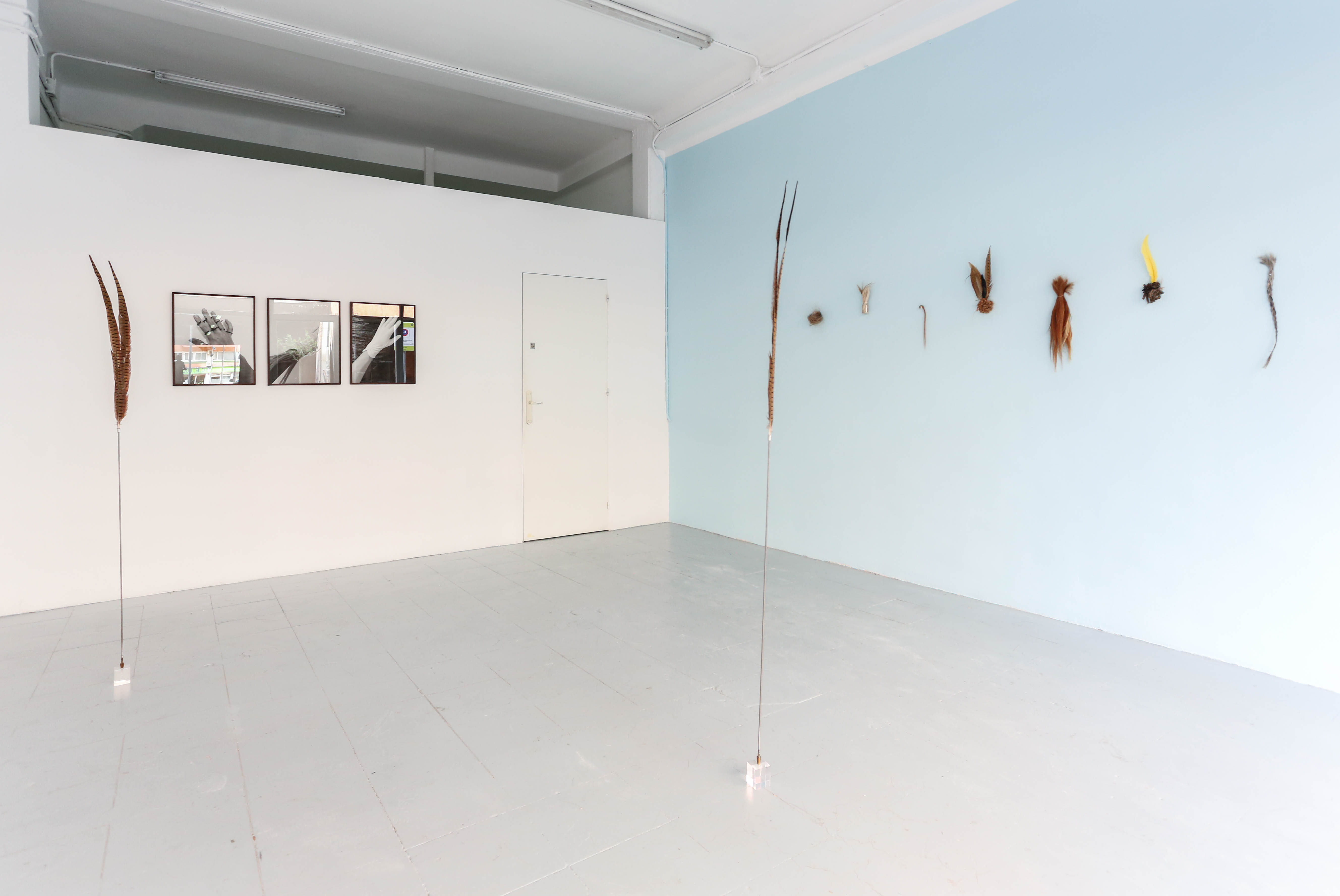
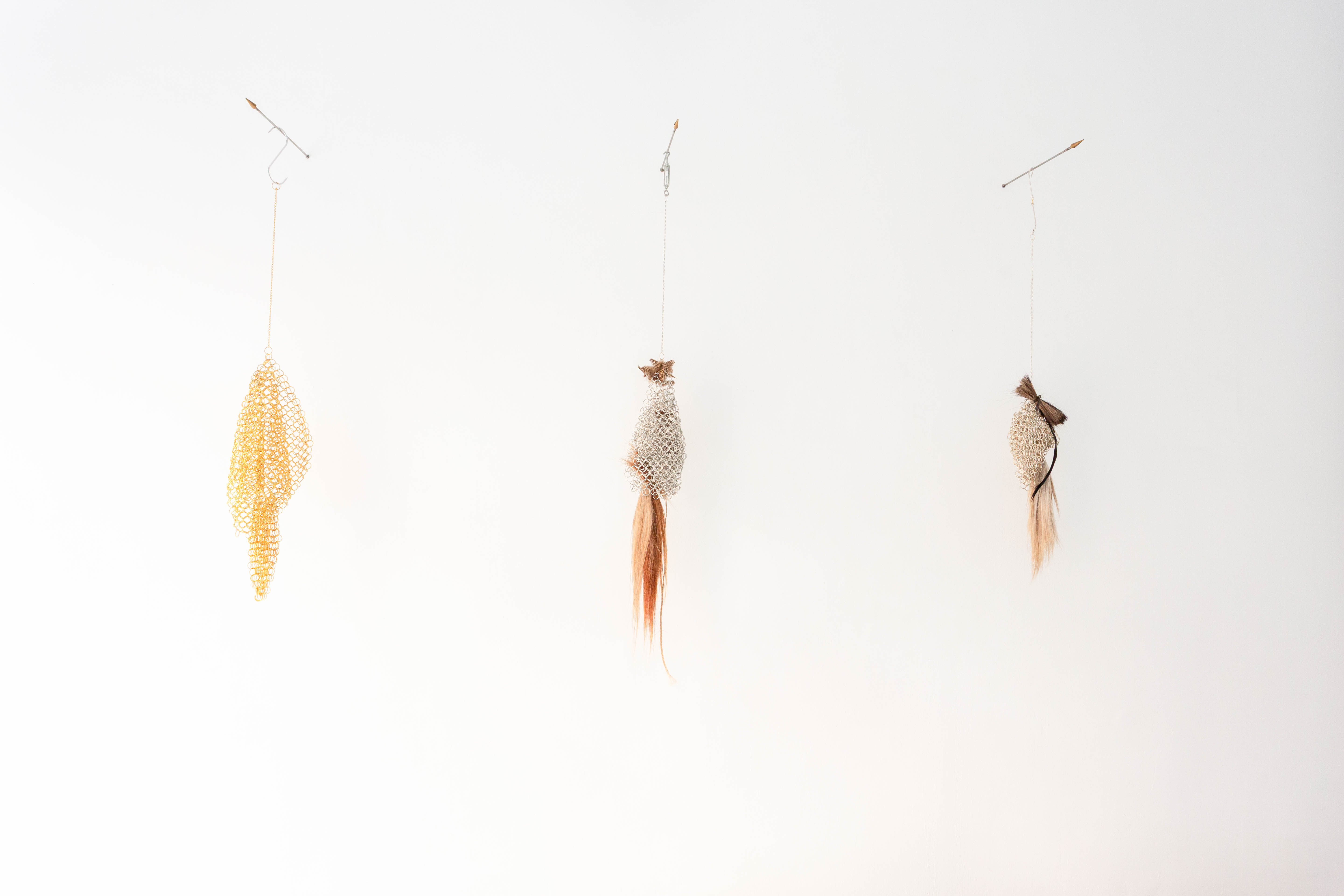
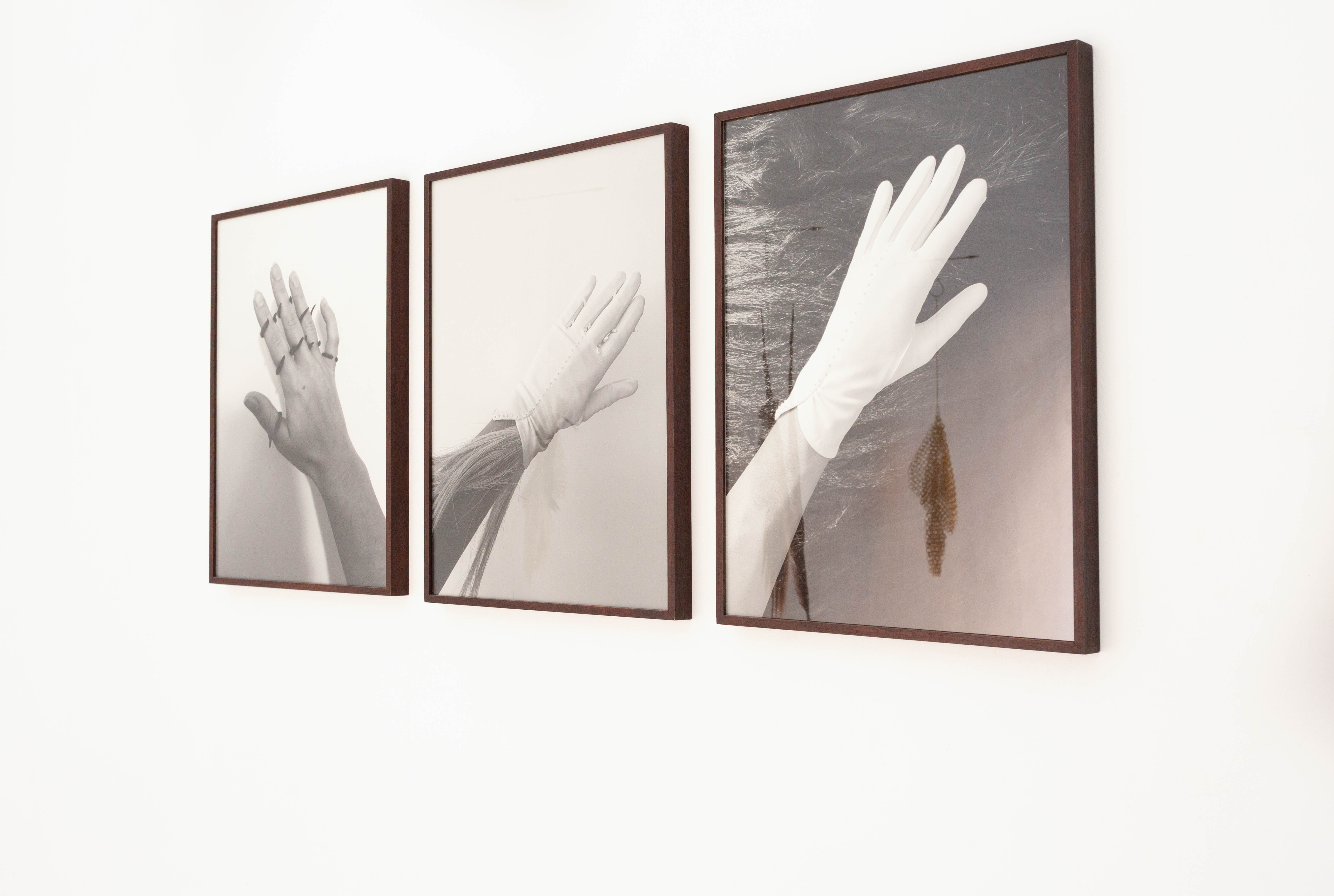
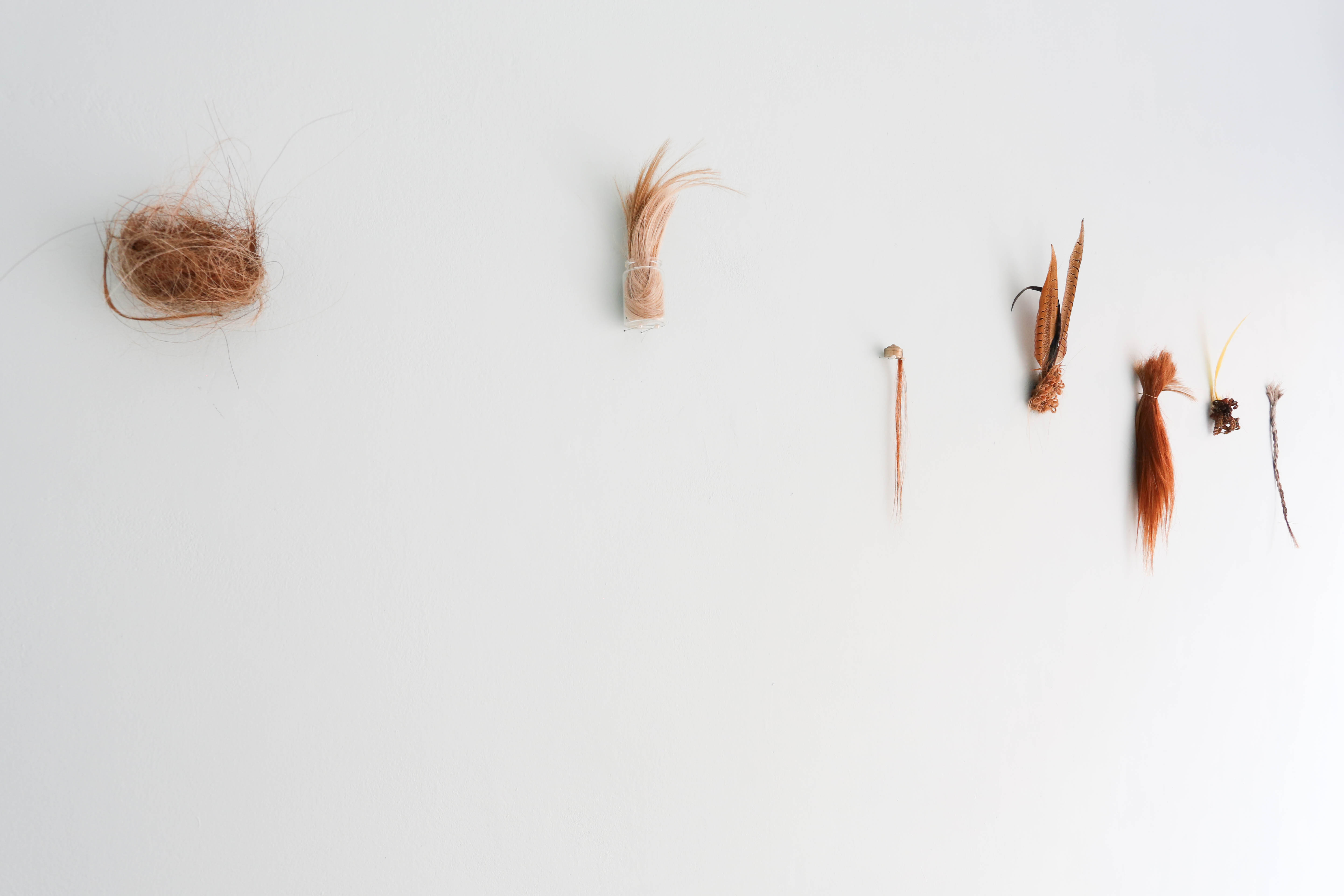
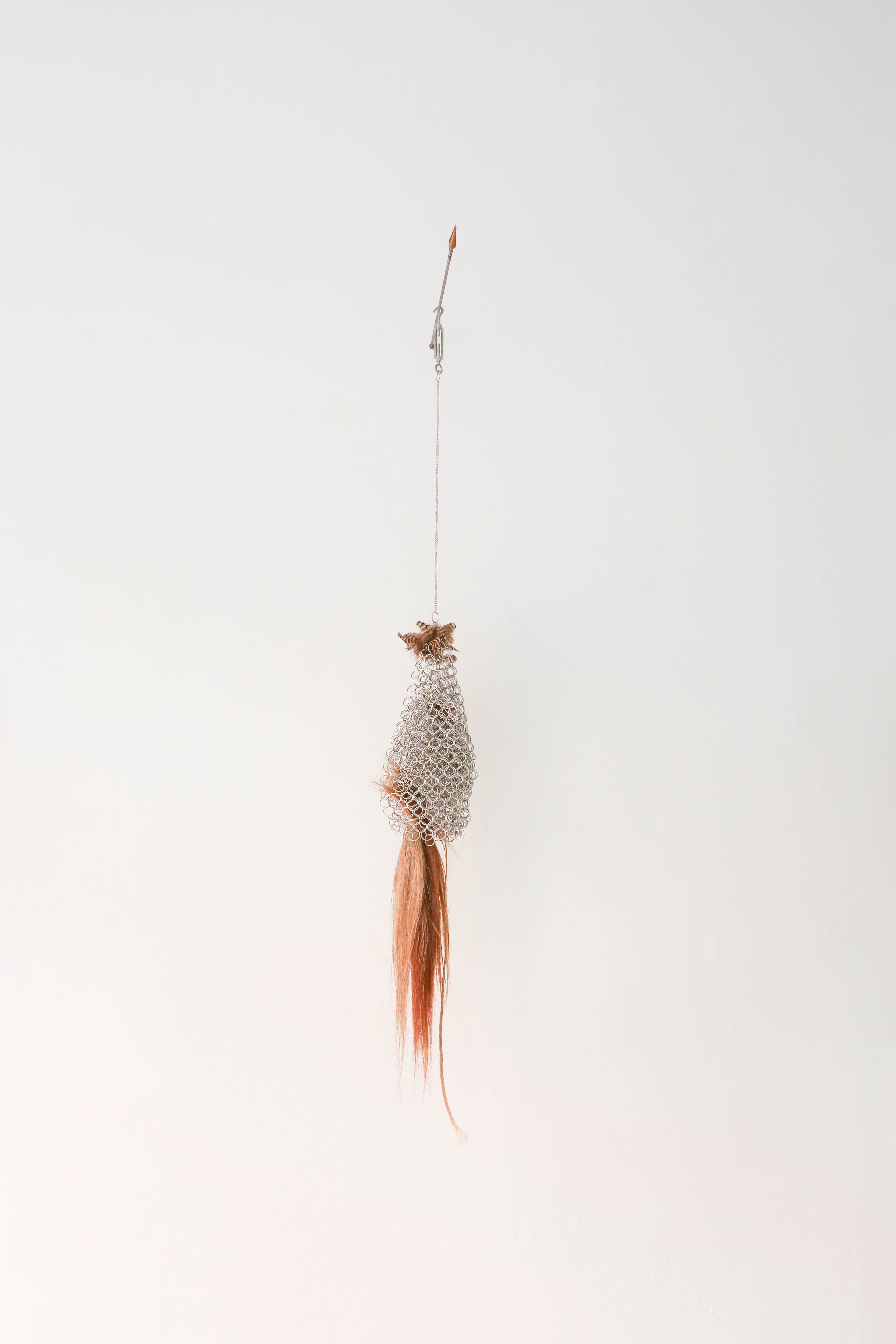
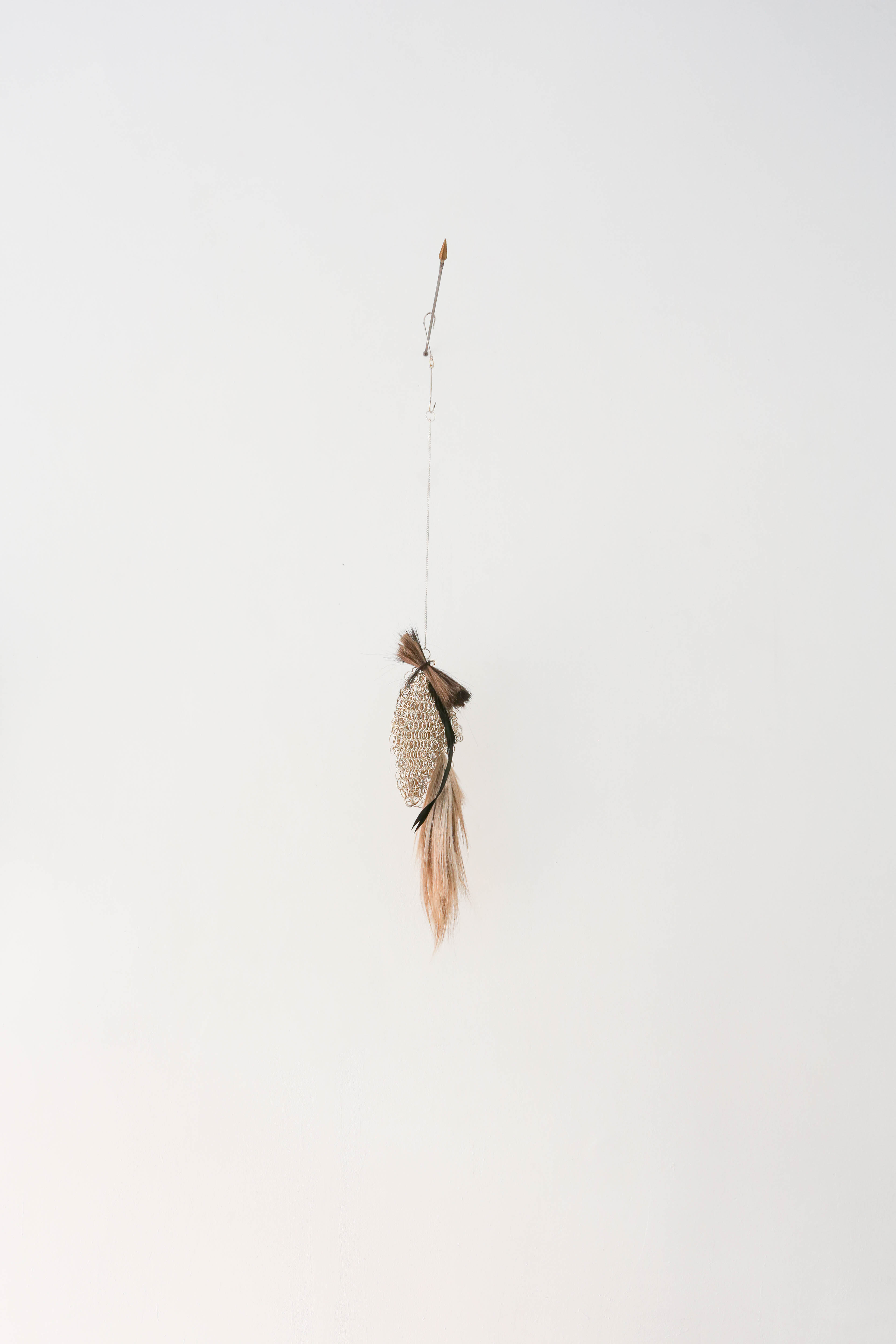
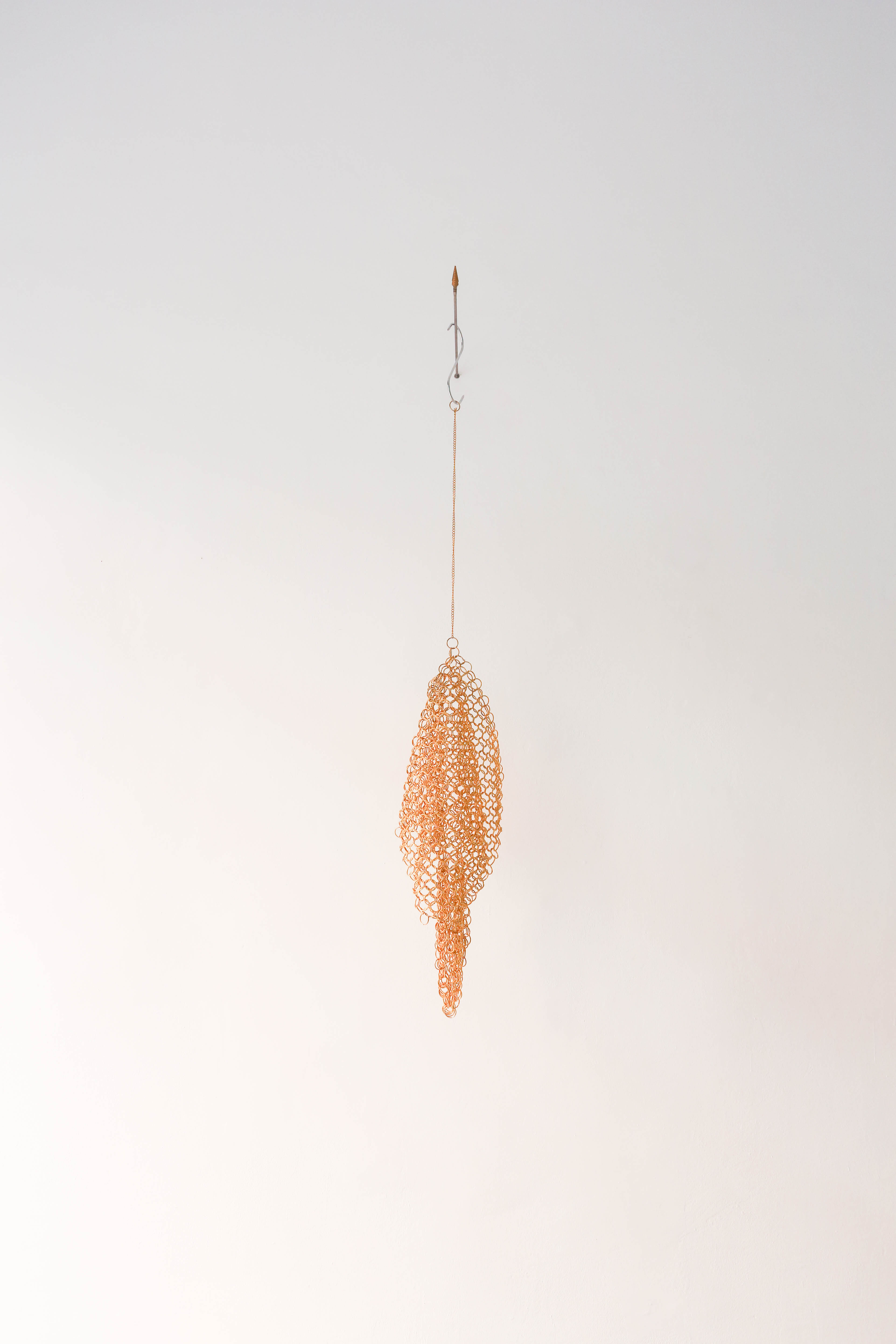
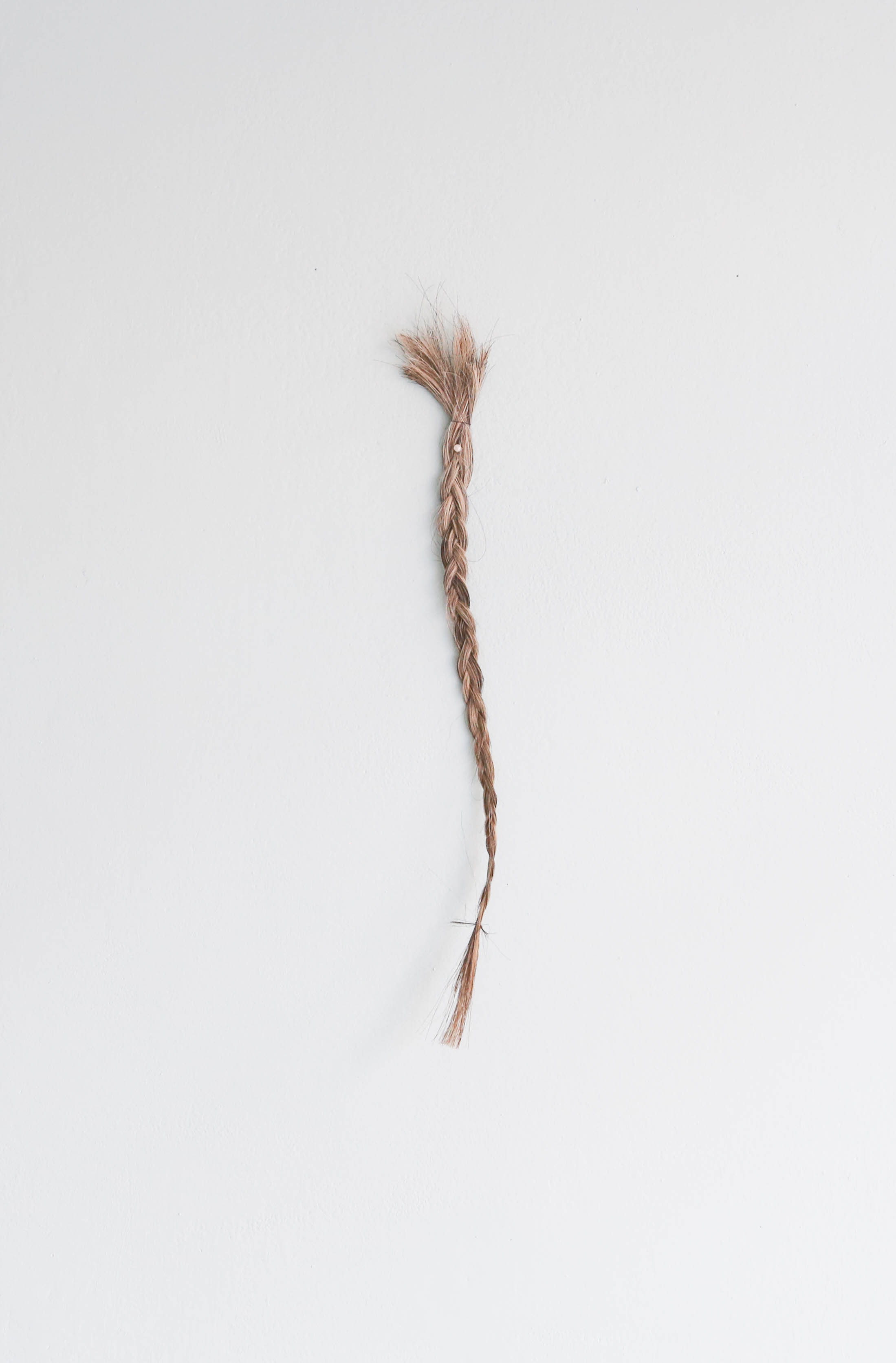
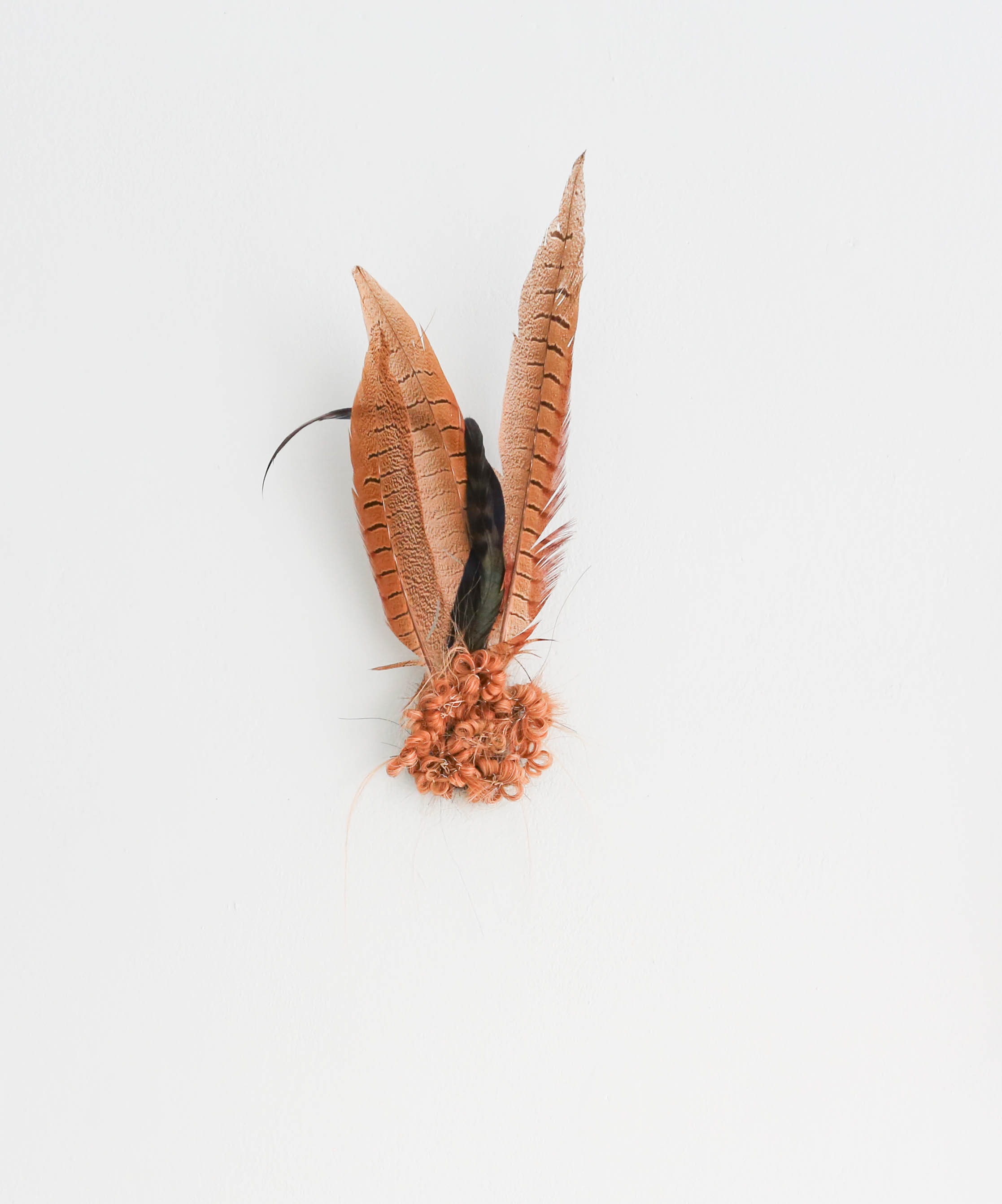
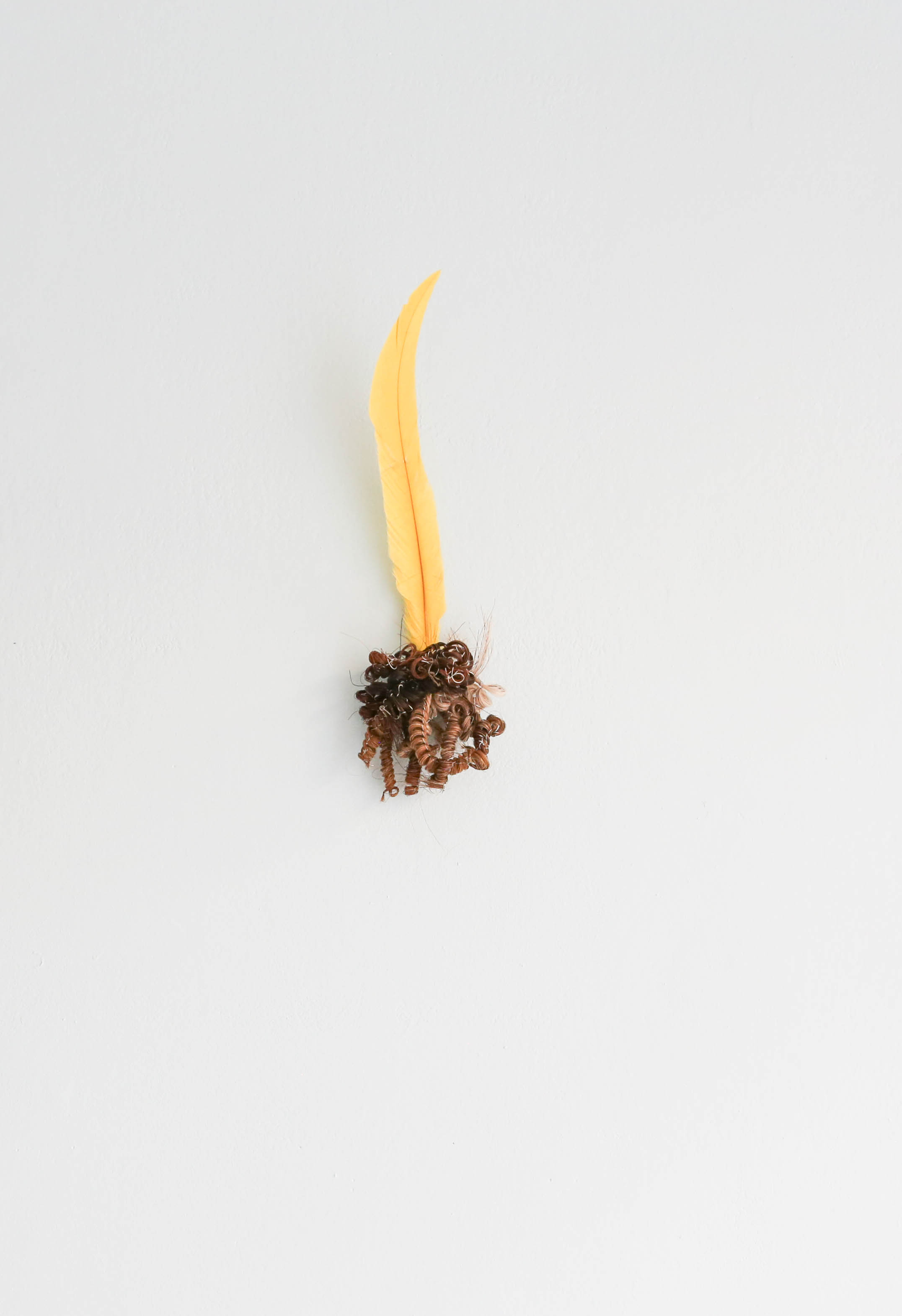
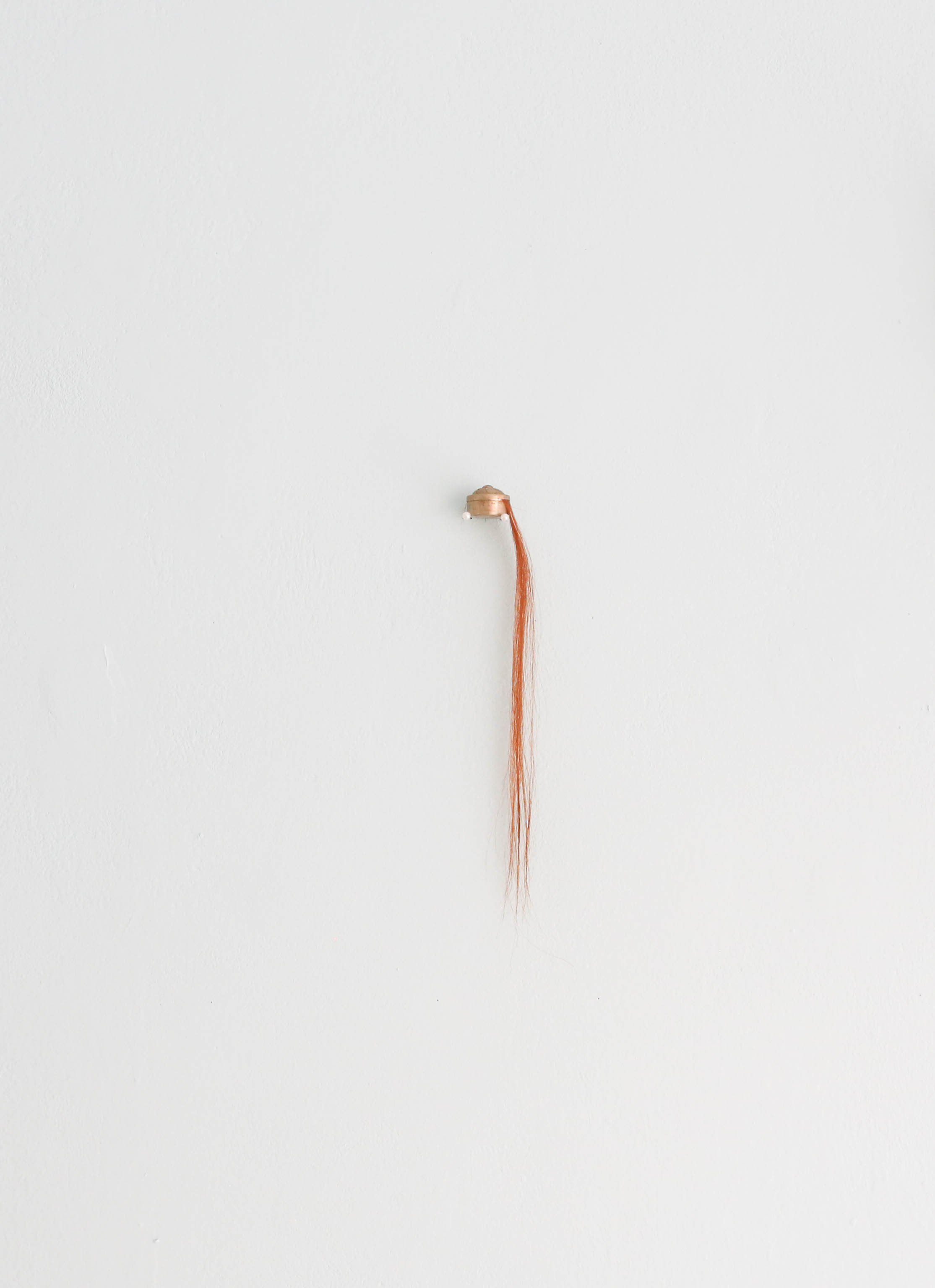
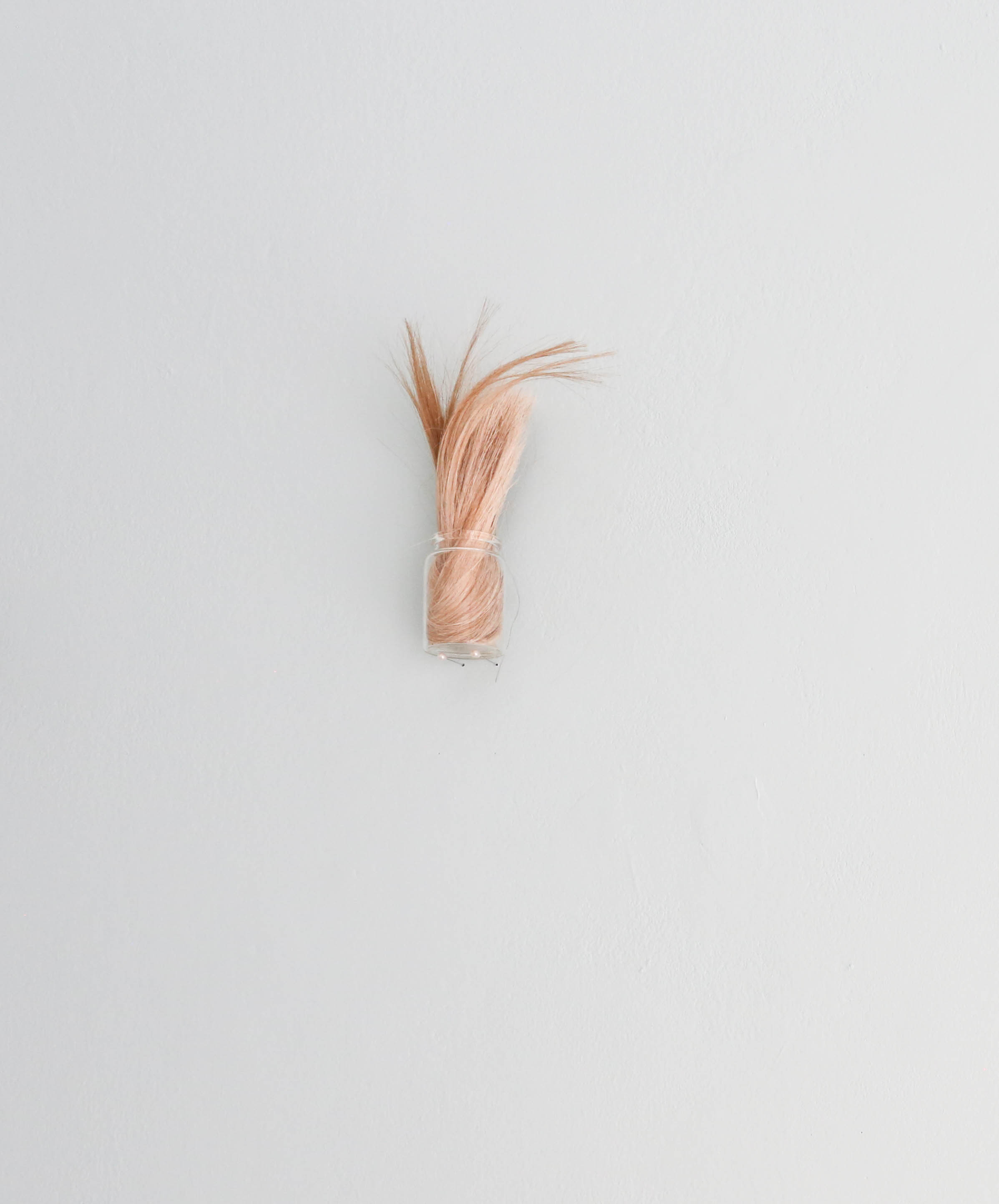
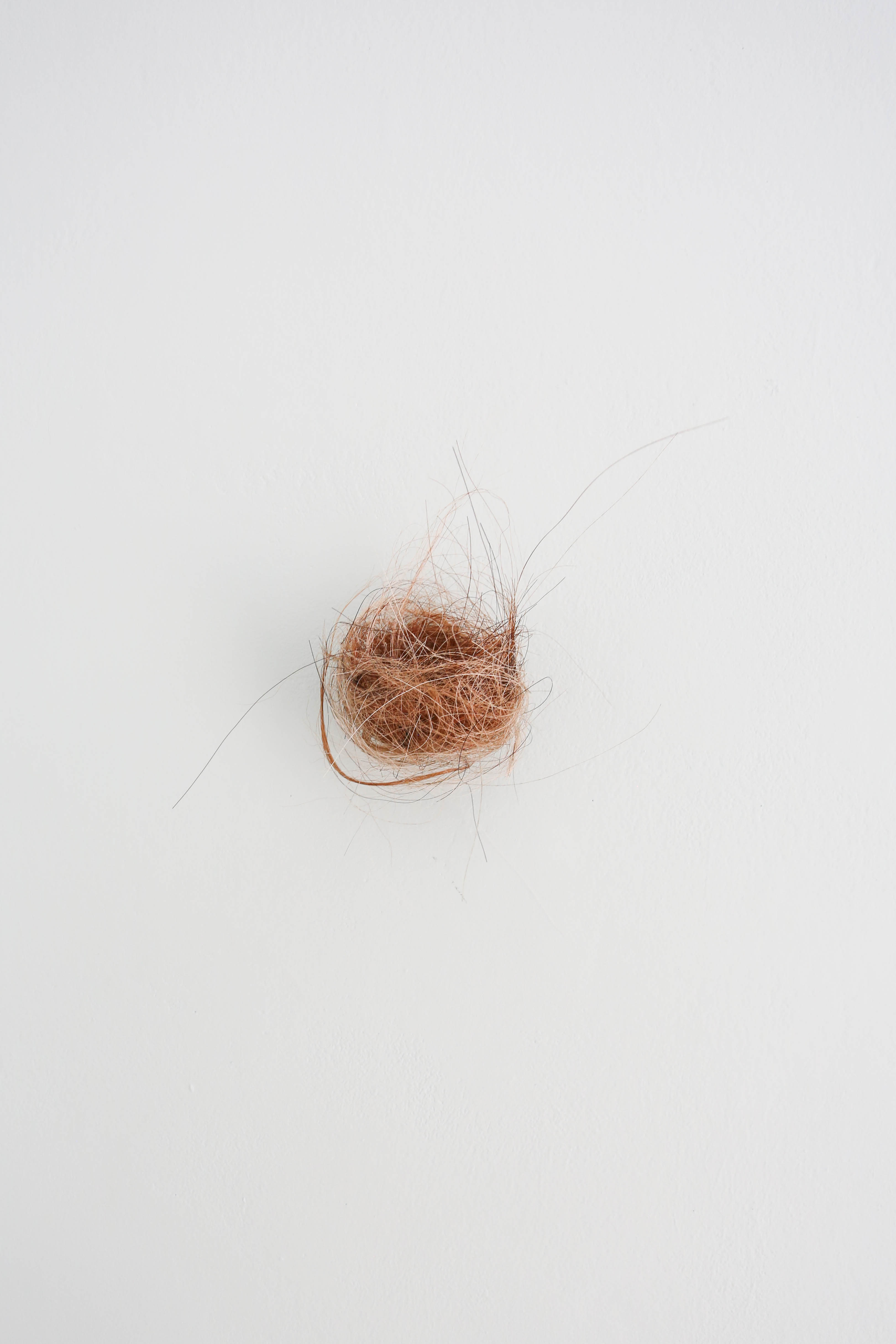
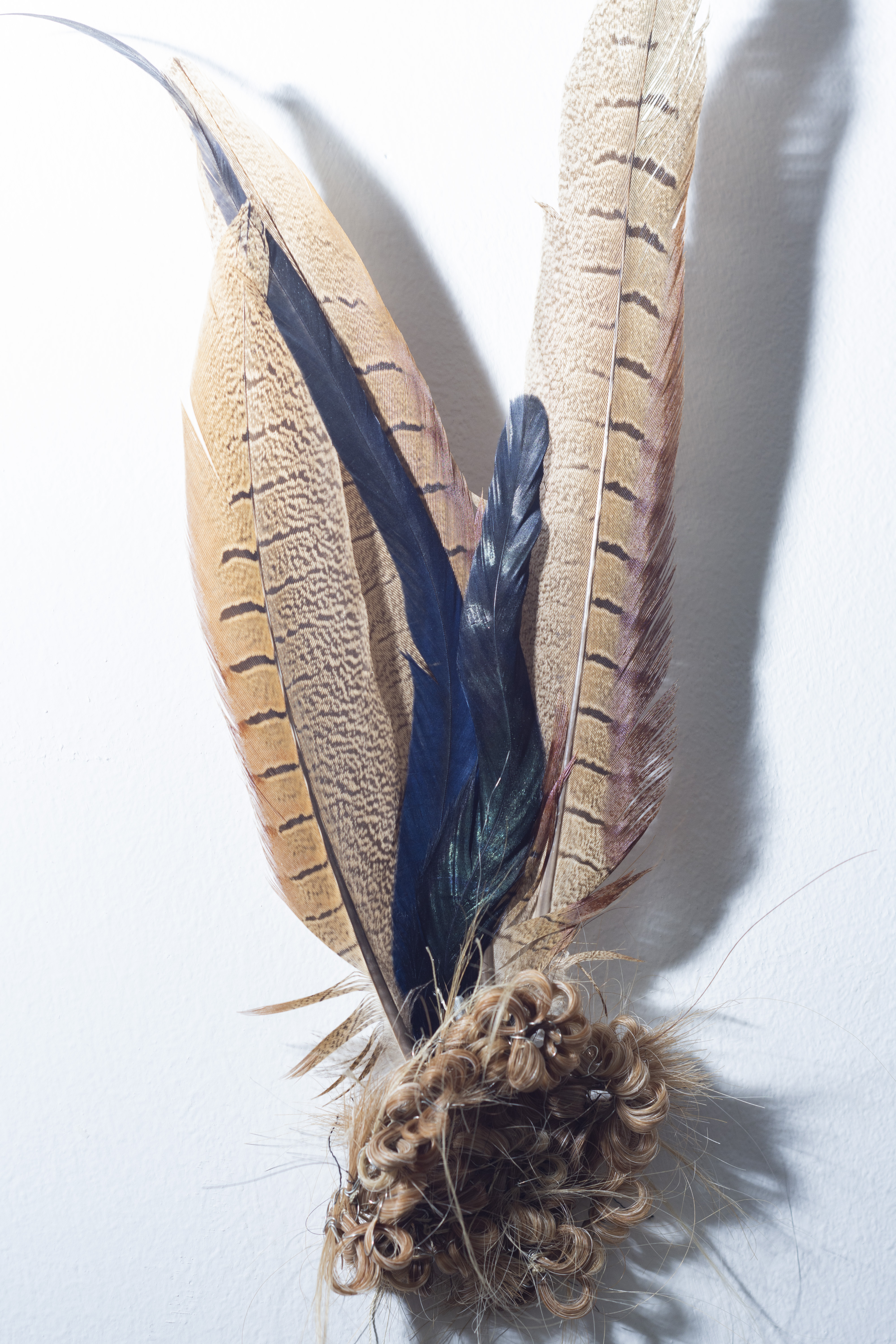
For several years now, Agustina Fioretti has been creating strange objects and images that resist recognition and taxonomic classification. This is not only due to the materials she uses—horsehair and bird feathers—which imbue her works with ambiguous traces of animality, but also because of her reuse of elements from the world of construction. Fioretti displaces things from their original context, generating a shift that allows her to produce new machinic-animal assemblages: neither horses nor birds, yet both at once. The cyborg emerges from the fusion of the technical and the animal, from the life of objects. What futures might arise from nests built with horsehair? What promises of monstrosity are announced in these futures?
In the debates that followed the Darwinian revolution, one of the major questions was how new forms of life emerged, whether gradually or surreptitiously. How do new specimens arise from others that, in some cases, bear little resemblance to them? Of course, this question had been developing for centuries. The emergence of life in environments seemingly inhospitable to it, along with the lack of knowledge about how certain species reproduced, made the theory of spontaneous generation a deeply ingrained model in common understanding for explaining the origins of life.
Once that idea was discarded, over a century ago, the Dutch botanist and geneticist Hugo De Vries formulated a response to the post-Darwinian question of how life transforms: “Species do not transform gradually but remain unchanged generation after generation until, suddenly, new forms arise that differ clearly from their predecessors and remain henceforth as perfect, constant, well-defined, and pure as one would expect of a species.”
Following this thread, we can reflect on the objects and images gathered here, where animality, intersecting with a materiality characteristic of human craftsmanship, raises questions about technology as a means of generating new animal-nonhuman-machinic assemblages. Fioretti undertakes a forward-looking escape, creating beings that establish a new system of relations and complicate their taxonomic classification: living entities that promise novel forms of life.
Curatorial Text Jesu Antuña
Tangent Projects, Solo Show, 2025
*Work selected for Fundació Vila Casas Premio Escultura 2024
In the debates that followed the Darwinian revolution, one of the major questions was how new forms of life emerged, whether gradually or surreptitiously. How do new specimens arise from others that, in some cases, bear little resemblance to them? Of course, this question had been developing for centuries. The emergence of life in environments seemingly inhospitable to it, along with the lack of knowledge about how certain species reproduced, made the theory of spontaneous generation a deeply ingrained model in common understanding for explaining the origins of life.
Once that idea was discarded, over a century ago, the Dutch botanist and geneticist Hugo De Vries formulated a response to the post-Darwinian question of how life transforms: “Species do not transform gradually but remain unchanged generation after generation until, suddenly, new forms arise that differ clearly from their predecessors and remain henceforth as perfect, constant, well-defined, and pure as one would expect of a species.”
Following this thread, we can reflect on the objects and images gathered here, where animality, intersecting with a materiality characteristic of human craftsmanship, raises questions about technology as a means of generating new animal-nonhuman-machinic assemblages. Fioretti undertakes a forward-looking escape, creating beings that establish a new system of relations and complicate their taxonomic classification: living entities that promise novel forms of life.
Curatorial Text Jesu Antuña
Tangent Projects, Solo Show, 2025
*Work selected for Fundació Vila Casas Premio Escultura 2024

.